
Chesterfield Township City Directory Shelf
Think of Chesterfield Township research as a shelf of different directory types rather than one master resident roll. Dated Macomb County guidebooks anchor it. It also holds the Library's Trinity material, a digital run of The Chesterfield Review, and wider Michigan directory collections. County guides identify offices, services, groups, places, and officials. That makes them strong for context. They will not list every Chesterfield Township household, though. For a name-and-address question, pair a county guide with a title-city directory or a criss-cross volume located through a library catalog.
| Collection | Years | Where held | Access |
|---|---|---|---|
| Macomb County government directories | 1947-48 to 2015-16; later guides through 2023-24 | Macomb County archive | Online dated guides; institutional and community context |
| Trinity History Collection | Census material 1850-2020; local materials vary | Chesterfield Township Library | Physical collection during library hours; contact staff for limits |
| Chesterfield Local History Digital Collection | Entire run of The Chesterfield Review; exact issue dates vary | Suburban Library Cooperative Montage | Free digital access; search interface requires live use |
| Polk and Bresser directories | Polk generally late 1800s onward; Bresser generally late 1960s onward | Library of Michigan and participating collections | Print, microfilm, catalog, Ancestry Library Edition, or HeritageQuest |
Start with the record closest to your date. A recent address may sit in a criss-cross volume. A county guide may cover officials and services instead. For an older Chesterfield Township name, search under Chesterfield, New Baltimore, Mount Clemens, Macomb County, and nearby titles. Postal and directory coverage did not always follow township lines, so a household can sit in an unexpected volume.
Macomb City Directory Years
The Macomb County directory archive gives Chesterfield Township a solid dated backbone. Its 1947-48 edition opens the posted historical run. From there the archive carries many editions through 2015-16, plus 2017-18, 2020, 2021-22, and 2023-24. These volumes are strong for placing township departments and courts in a given era. They also place institutions and elected officials. For anyone tracing how local government took shape, that year-by-year anchor is hard to beat.
Three missing years are documented, not mysterious. No county directory was printed in 1980, 1981, or 1983. That matters when a paper trail suddenly stops. It is a publishing gap, not proof that a family or address disappeared. A newspaper, a title-city directory, or a property record can bridge the silence.
The archive also works as a check on Chesterfield Township's public side over time. One volume can place a department or service at a specific point in the record. That helps identify the right custodian before a later request goes out. Still, a county directory is not a resident list. An official's name in a volume proves a public role, not a household address. The county directory archive image below shows the page itself.
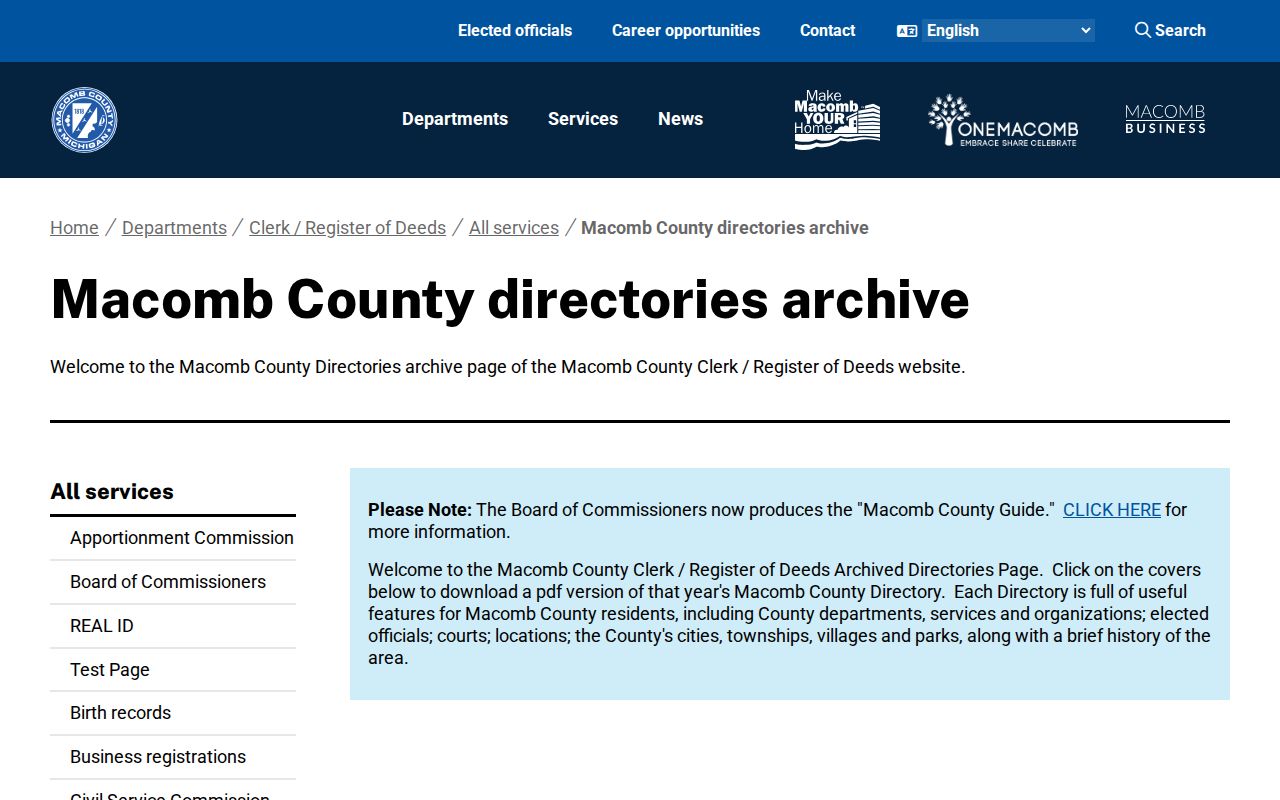
Use the dated cover links as an institutional timeline. Then move to household-focused sources once the question becomes who was listed at an address. A county directory answers the public side. Past residents usually require a different volume.
Note: County guidebooks identify public and community context, but they should never be treated as a complete Chesterfield Township household directory.
Chesterfield Township Trinity Archive
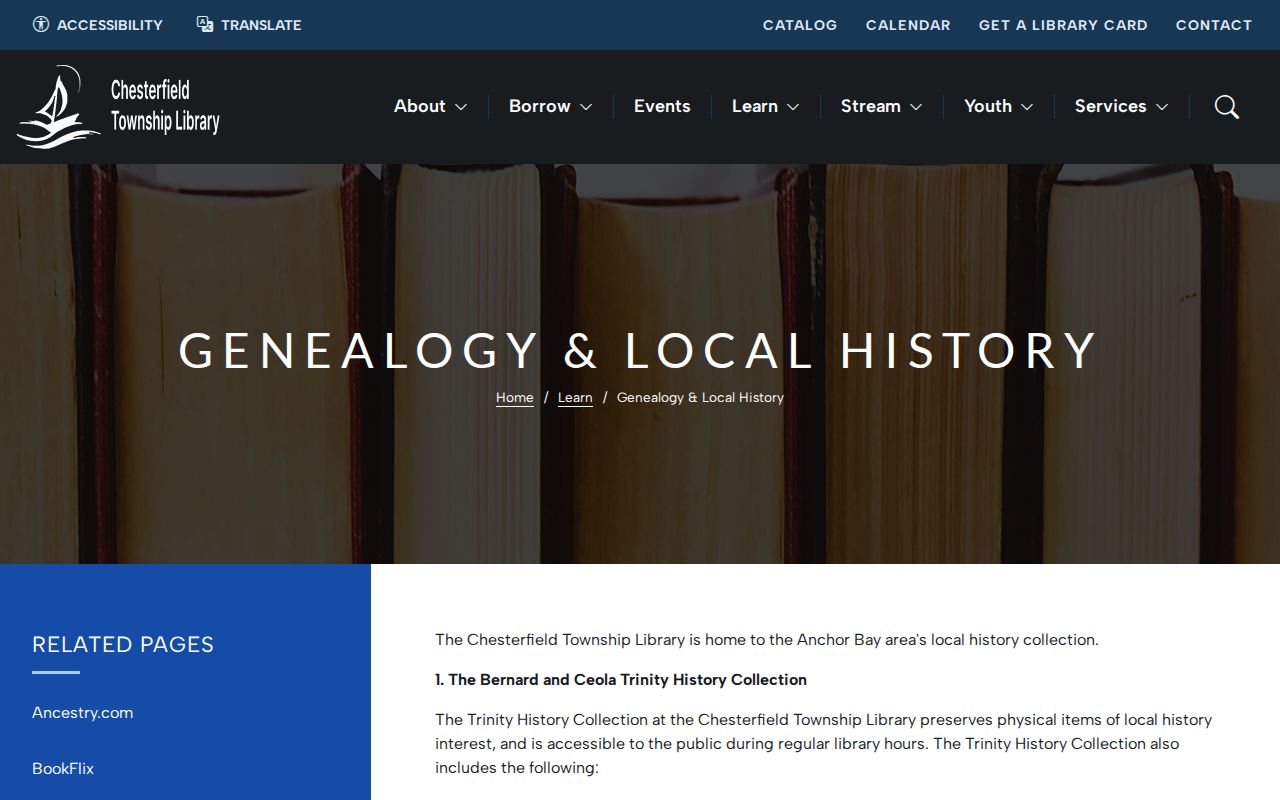
For local material that never reached a commercial directory, the Chesterfield Township Library local-history collection is the practical starting point. Its Bernard and Ceola Trinity History Collection holds physical local-history items. It also covers census information for 1850-2020. Donated articles on the May 8, 1964 Chesterfield tornado sit within it. Library hours govern access to the physical material. Staff can explain any limits on specific items.
The Library became the permanent repository through a 2008 archive partnership with the Historical Society. Many society records were digitized in 2020. The history earns its shelf space. A clipping, photograph, map, donated abstract, or local publication can add context a city directory entry cannot carry.
The local-history page also identifies NewsBank collections for the Macomb Daily, the Detroit News, Michigan News Sources, and America's News. Those sources can test a date, spelling, or event. A newspaper mention is a lead, not a substitute for a primary record or the exact printed volume. The Historical Society archive partnership underpins these holdings.
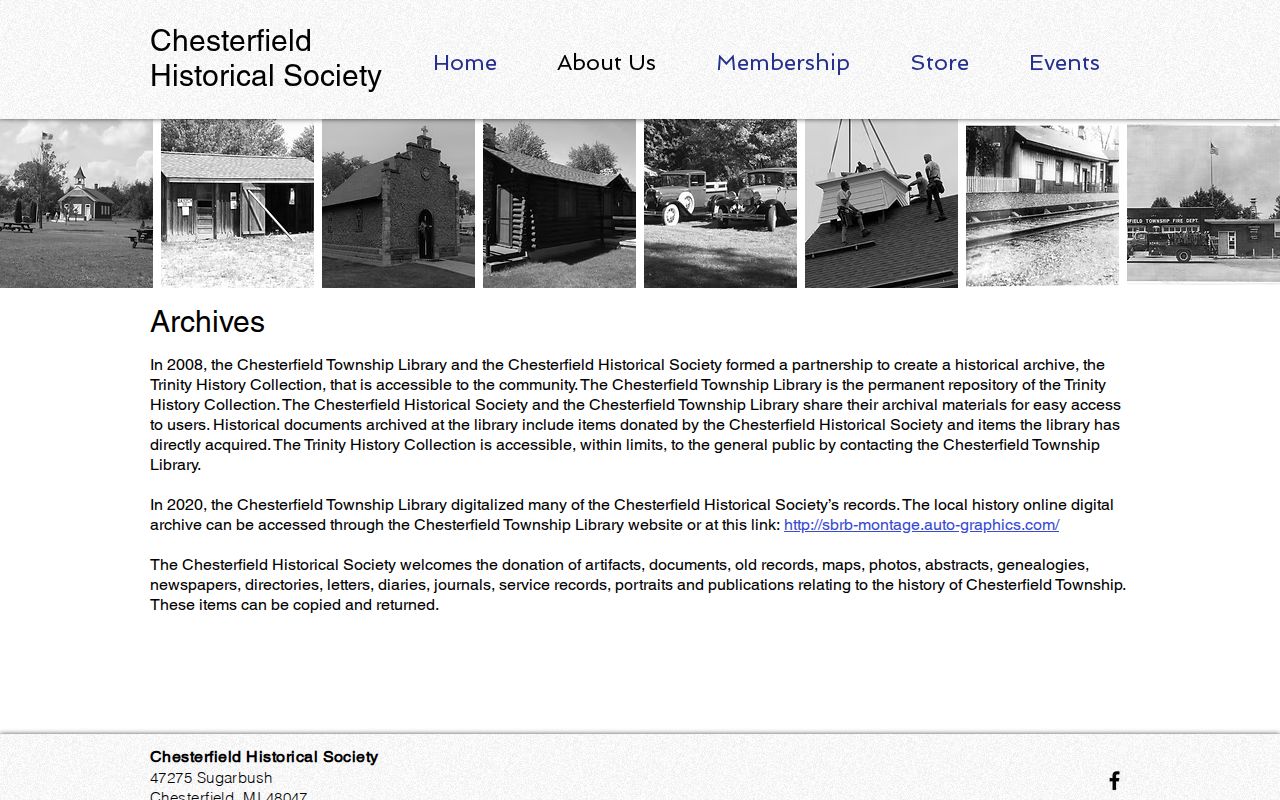
Access runs within stated limits. So request a specific address, surname, subdivision, and date range rather than expecting an open personal-name database.
Reading a Chesterfield Township City Directory
A directory entry is a dated listing. It is not a modern identity record. The Library of Michigan says Polk surname sections can include a household head, occupation, and address. They can also list other household members and an owner or renter indication. The street section places residents or businesses in house-number order. Phone pages generally name only the household head. Read the volume's own key before trusting any short notation.
| Name | A household head and sometimes other household members; check spelling variants. |
|---|---|
| Address | A listed street address, which should be checked against the volume year and street naming. |
| Occupation | A description that may appear in a Polk entry; do not infer an affiliation that is not printed. |
| Owner or renter notation | A possible clue in the applicable volume, not proof of title or every occupant. |
| Phone listing | A head-of-household connection in number order, where the directory includes one. |
- Criss-cross directory
- An address-first directory whose streets are arranged alphabetically and then by house number.
- Householder index
- A name-oriented listing that usually represents the listed household head, not everyone in the residence.
- Abbreviation key
- The volume’s explanation of its marks and short forms. Transcribe it from that exact volume.
A missing entry proves nothing about absence. Children, roommates, unlisted renters, and households outside a volume's coverage may simply never appear.
Bresser City Directories by Address
Bresser works backwards from most directories. Instead of names, its street pages lead. Addresses run in house-number order. Each entry can show the household head, a phone number, an owner or renter mark, the first year at that address, and notes on arrivals or moves within the coverage area. That makes Bresser a strong bridge for address-first research. It fits a Chesterfield Township street directory hunt well.
The Library of Michigan directory guide reports Bresser holdings starting in the late 1960s. Polk volumes reach back to the late 1800s. No exact Chesterfield Township run is established there. Search the ANSWER catalog for Chesterfield, New Baltimore, Mount Clemens, Macomb County, and nearby towns. A quick question to the reference desk can confirm a volume. Do that before you rely on it.
Print volumes sit on 2nd Floor South, shelved by city or county. Microfilm and fiche live in the 2nd Floor South Microfilm Room. Online copies may run through Ancestry Library Edition or HeritageQuest. The local library describes Ancestry Library Edition as in-library access. Confirm the current arrangement before you travel for a city directory lookup.
Chesterfield Review Directory Clues
A city directory is not the only dated name-and-place source. The Chesterfield Township Library says its Local History Digital Collection holds the complete run of The Chesterfield Review. It runs through the Suburban Library Cooperative. For addresses and events, this local paper can help. It also covers community notices and family mentions. It can beat a broad regional volume. The Local History Digital Collection holds the archive.
Search the Review by person, street, event, or issue date when the live collection allows. Then pair any newspaper clue with a directory volume, an original record, or a library-held source. That habit keeps household conclusions honest.
Telephone directories offer another dated clue. Coverage varies, though. A number-order page usually names only the household head. Treat a phone listing as a way to connect a printed name, number, and address in that volume, not as proof that every resident at the address appears.
Tracing Chesterfield Township City Directories
City directories earn their keep in sequence. Note the exact spelling, address, phone, occupation, and owner or renter mark. Take these details from every volume in a Chesterfield Township run. Then line the listings up against the nearest federal census. Its identifiable schedules are open through 1950 under the 72-year rule. A move between listings may point to a deed. It may also lead to an obituary, marriage record, or probate matter. Each record answers a different question, so let each one do its own job.
- Find the earliest available listing for the name, address, or neighboring postal city.
- Copy the entry exactly, including the volume year and its abbreviation key.
- Follow the person or address through later directories, noting changes without assuming why they occurred.
- Match the closest released census year and compare the household names and ages.
- Use a deed for ownership, or a vital, obituary, or probate source to test a later change.
A deed follows title. A city directory follows a printed listing. Neither one alone proves every occupancy at a Chesterfield Township address. For current address questions, the modern parcel and deed workflow sits with the Chesterfield Township street directory.
Gaps in Chesterfield Township Directories
Historical searching has real blanks. No official source lays out a complete Chesterfield, New Baltimore, or Mount Clemens Polk and Bresser shelf list. It names no exact years and publishers. No courthouse fire or local records disaster is documented either. A gap can mean a volume was never printed or sits on microfilm. It may carry another title city, or it may not be digitized yet. Or it simply waits to be found in some records office.
Build a fallback chain. The library, the Historical Society, the Library of Michigan, the county archive, and NewsBank each add a layer. The library's remote NewsBank collections include the Detroit News. They also include the Macomb Daily, Michigan News Sources, and America's News. A short request with the surname, address, date range, and nearby title city is far more likely to earn a useful catalog or archive response. A vague one earns far less.
Note: Keep a source log with each volume's exact title and year. Township, postal-city, and county directory coverage can overlap without matching.